
The Multiverse Fixes Everything
In science fiction, no one cares if you scream…

This is not an article about science. It’s about sci-fi media, particularly around the ideas in comics and superhero media. That being said, I need to introduce some concepts that have a bearing later on. I tried to start with the comics and films and go into the science later, but my “intro” blew out to a complete essay of its own. So, I’ll start with the science here instead.
The theory of the multiverse is a tricky one, sometimes seeming more sci-fi than real-world science, due to its speculative and theoretical nature. It proposes that our universe, immense as it is, is one of many, possibly infinite universes out there, each evolving in its own way, with its own laws of physics, forces, particles, and governing principles. There’s a lot to it. Here’s one science article on the topic, if you want more: https://www.livescience.com/multiverse. Astrophysicist Lawrence Krauss explains some possibilities in this quick clip:
I like the way Krauss, a massive sci-fi fan himself, talks to the public. As Rogan says in the full interview, Krauss doesn’t dumb it down too much; he tries to make it at least somewhat accessible to the common person. In Rogan’s own words: “You’re not speaking in layman’s terms, but you’re also not speaking in theoretical physicist terms. You’re making a bridge.” That’s what he does. He admits this is hard stuff to understand and digest, but it’s worth looking into anyway – to realise, as Kraus says in the interview, that the world is “different than I thought and that’s what’s wonderful. So, you can appreciate science without mastering it”.
That’s some deep shit, there.
I won’t go too deeply into it here, never fear!!
Often, discussions of the multiverse take on more of a science fiction feel than a grounded scientific idea, because the theories are based on possibilities and theoretical ideas. I remember one of the earliest versions of the multiverse theory that I heard in a discussion by Lawerence Krauss again, who said to the interviewer that in some places in the multiverse it’s possible that it’s almost the same world as ours, but there, the roles were reversed and Krauss was the interviewer and was the one asking the questions, and the interviewer was the one being interviewed (paraphrased, I can’t find it!!). And that’s because in an infinite multiverse, all things are possible somewhere out there. That kind of idea flows from the idea of the infinite – if there are an infinite amount of possible events, then somewhere out there all possibilities must be explored.
In the Marvel Cinematic Universe, the character America Chavez says that dreams are a window into those other worlds – that our dreams are real somewhere out there (“Doctor Strange and the Multiverse of Madness”)…
I hope that’s not true… I’ve had some weird dreams.
I am really not a fan of that idea… “infinites” blow my mind (I think that’s pretty normal), and it seems more likely to me that the actual options are finite and that each “bubble universe”, expanding out into the vastness of space, forms uniquely to the next. There are no repeats, no take-backs, no “Sliding Doors”, no places where you live out your life making different decisions in the same situations you have encountered here.
In my mind, it’s more likely that all worlds are unique and that you are the only you to have ever existed. But that’s just me. I am a high school science teacher majoring in Geology… I am not a physicist of any description.
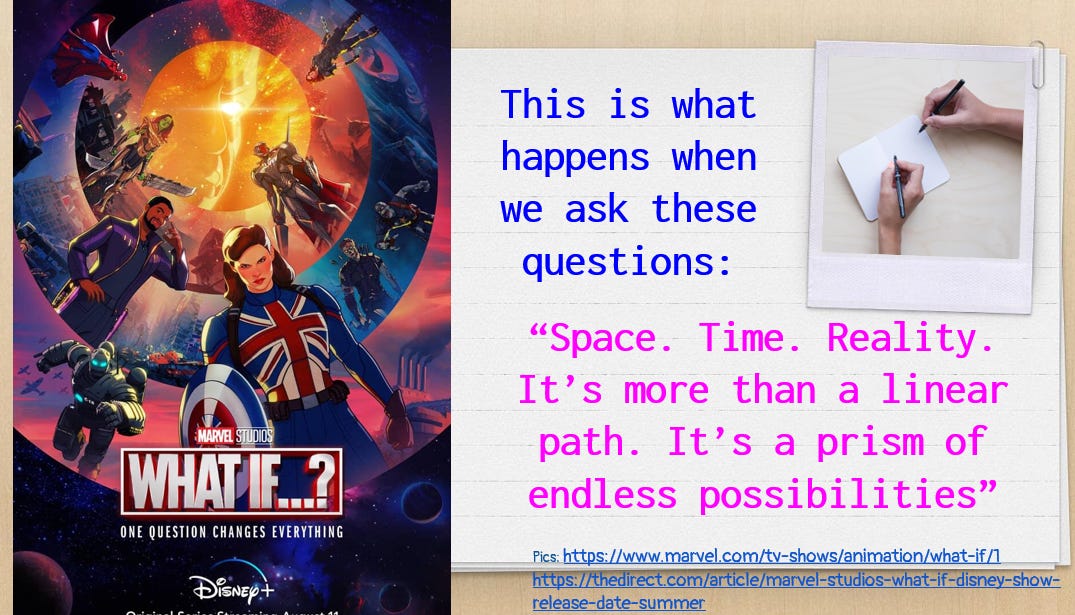
Onward to my discussion of the multiverse in sci-fi media:
Now, Like Alice, We Tumble Into the Rabbithole…
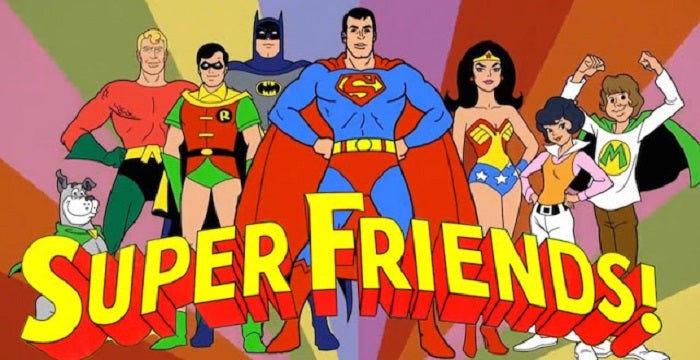
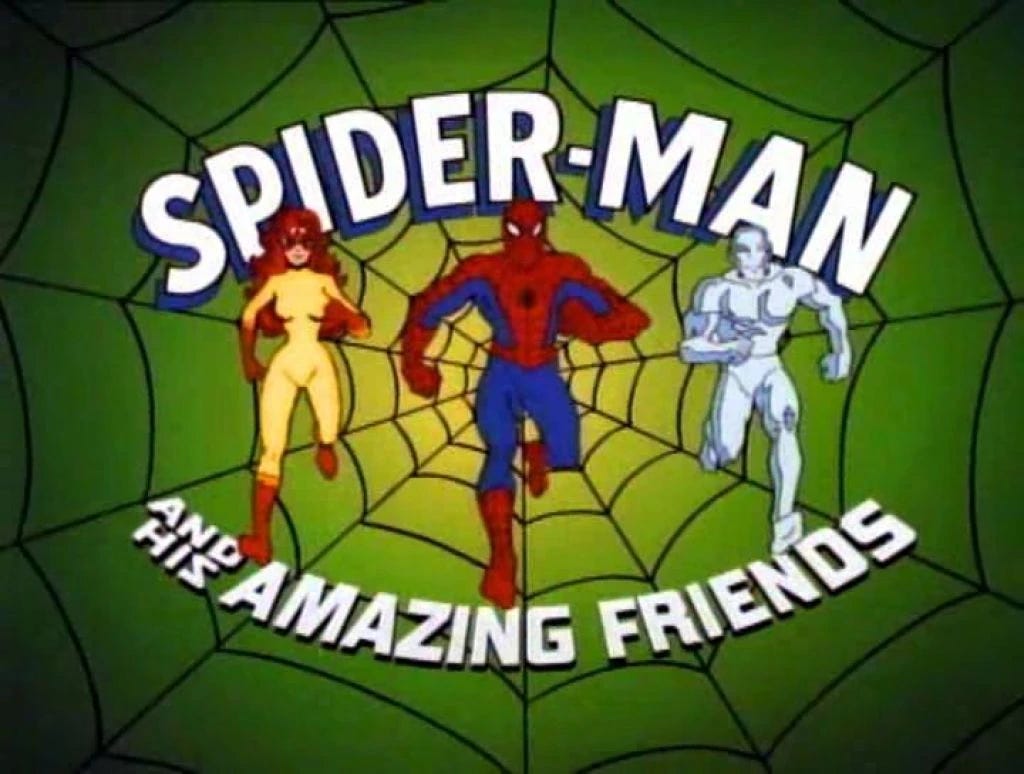
I’m a sci-fi fan. I’m a superhero fan. I’m a TV and film fan. I have been these things since I was a kid in the ‘80s. In that time, I have watched all manner of crossovers between these mediums – some good, many bad. The ‘80s were a time for cheap and bad versions of each of those things. Regardless, I look back on them with fondness, even the ones that don’t hold up now at all. As a kid, I loved “Spider-Man and his Amazing Friends” and “Super Friends”, I loved the ‘60s “Batman”, I loved the “Superman”, “Spider-Man”, and “Incredible Hulk” movies and TV shows. I even loved the 1990 “Captain America” movie. It was always amazing to see my comic book heroes brought to life. Now… I can say that all of those projects are more bad than good – the ‘78 “Superman” included – but they hold a place in my heart, and they will always have my love.
After them came “Batman” (1989), and it was great. “Batman Returns”, not as good, but still cool, and – this is a hot take that will infuriate people – I loved “Batman Forever”. “Batman and Robin” is horrible, and reigned as the worst Batman movie of all time until it was challenged by “Batman v Superman”… Now, I’m not sure which is worse, and they are both bad for very different reasons.
Quite a few more superhero movies were made around this time, but it was not a medium taken seriously, because the colourful costumes and far-out villains did not translate to the screen very well.
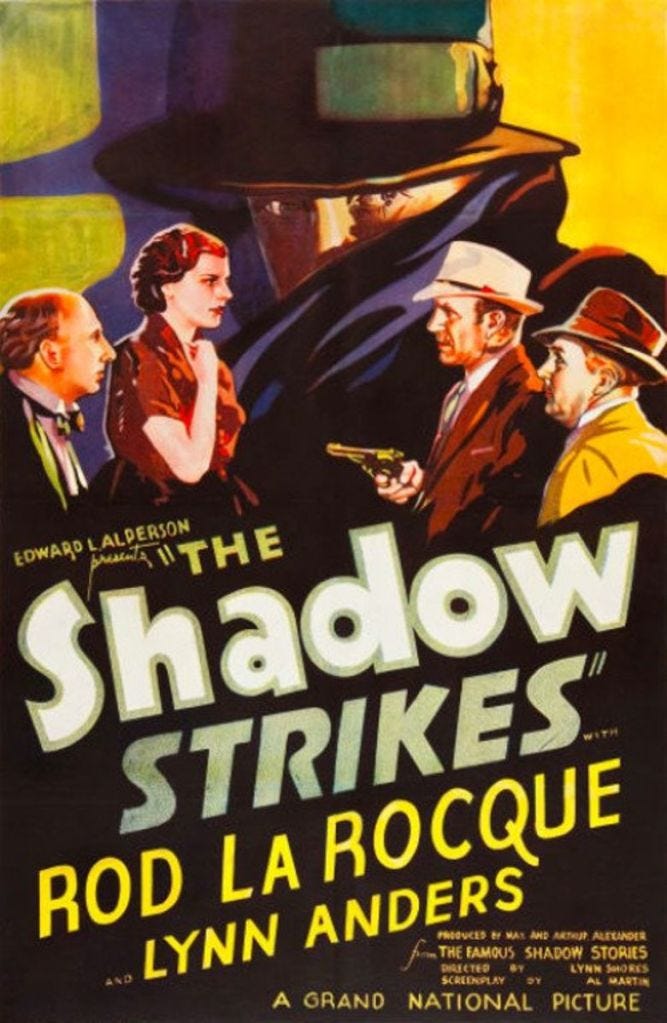
In case you are wondering what came first, the Batman-chicken or the Superman-egg, here’s a list of superhero films in chronological order right back to 1937 with “The Shadow Strikes”: https://flightstightsandmovienights.com/review-index/the-list/. Some interesting projects there, and some definite evolution over time from the early serials and noir versions, through to the campy years and onward to our grittier, more grounded, “real-world” versions of today.
I tried to think of where I would say things changed exactly. Firstly, the change for these characters was in the comics, although it definitely drew on broader fiction trends and the rise of the anti-hero in pop culture. Frank Miller’s takes on “Wolverine” and “The Dark Knight” brought both of those characters to the forefront, reimaging them in much darker tones. The Punisher and other anti-heroes were running around, and the overall tone had shifted to a much grittier one. In film, it’s reflected in all of the cheaper superhero flicks of the time – “Darkman”, “Guyver: Dark Hero”, “The Crow”, “The Shadow”, “The (original) Punisher”, even “Robocop” (if he qualifies). The ‘70s and ‘80s were the time of the antihero. Charles Bronson, Clint Eastward and their peers were doing the same things in the broader action film culture, and comics and their spin-offs were not immune to this shift.
The big heroes weren’t immune to this either, and the eccentric Tim Burton’s dark, Gothic take on the Batman, black suit and all, definitely fits into this era. That being said, it still managed to be campy and over-the-top, fantastical and gothic rather than real-world gritty. Still, I think when we look at where the change really occurred in the major leagues, it was Batman ’89. It was, unfortunately, a series whose tone was ruined by Joel Schumacher’s run, starting with “Batman Forever” (which I do love more than most) and reaching thermonuclear detonation with the horrible “Batman and Robin”… Once you put nipples and codpieces on a Batsuit, you’ve kinda dropped the ball…
The next one that is underrated and had a bigger cinematic impact than it gets credit for, even in the special effects technology it employed, would be “Blade”. I am not a fan of this movie (I don’t like excessive blood, and that shower scene is too much for me), but I love aspects of the story, I love the portrayal, and I love the sequels. It opened the Marvel floodgates, and we have not stopped since.
Bryan Singer’s “X-Men” was where the shift became mainstream. The decision to remove the gaudy costumes and tell more of a sci-fi story than a traditional superhero one had a massive impact. And as an X-Men fan long before most Australians knew who they were, I was all in for it. I couldn’t believe my favourite heroes were being brought to life. I didn’t care that they were all in black leather, and the line “What would you prefer, yellow spandex?” went a long way to soothing the wound made by the lack of colour. (Wolverine being over 6 feet tall took a long time to adjust to, though!! Now, I can’t imagine him played by an appropriately sized character. Tom Cruise is, after all, too old… :P ).
The decision to remove the colourful costumes was so important at the time. If they had used any version of the comic-accurate costumes, the movie would’ve flopped for sure. It would not have been taken seriously. It would not have been something that audiences would “believe” or buy into. Hugh Jackman appearing as Wolverine on screen for the first time in skin-tight yellow-and-blue tights would not have gone down well. Nowadays, we are more used to it again. The modern Marvel movies have brought the colour back, making practical-looking tactical costumes that aren’t as out there as the comic-accurate ones (with the exception of the horrendous Avengers Captain America uniform, which they thankfully scrapped after that film). They tried to make the uniforms have some appearance of practical functionality, to look like a soldier or SWAT team’s tactical uniform, more than a wrestler’s costume (which was what the original superhero tights were based on – wrestlers and circus performers colourful costumes).
Argh… this was supposed to be an introduction, before leaning into what I was going to actually talk about… Forgive me, I have geeked out for too long. I could talk about this forever.
Anyway… the black leather costumes helped to semi-ground the fantastical sci-fi story in a possible real-world scenario. That’s a trend that has possibly gone too far, and we see a little bit of a stepping back from that in more recent times, with the return to some of the possibly more campy versions of the characters. That being said, we have learned in recent times, and the new ones combine bright colours, humour AND darker, serious tones together, with mixed success. “Guardians of the Galaxy”, “Thor: Ragnarok”, and the new “Superman” landed this so well. “Thor: Love and Thunder” took it way too far. A balanced medium works best.
Back to the early 2000’s:
Sam Raimi’s “Spider-Man” brought the colours back, but still went for a dark horror-esque tone that rebalanced the inherent campiness of the costumes.
“Daredevil” and “Elektra” carried on this trend, and the early 2000s were peppered with Marvel movies along these tones – some colour, some darkness, some humour, and an overall attempt to take the medium more seriously than “Batman ’66” and “Superman ’78” ever tried to, for which I will be forever grateful. Now, all of these projects I’m talking about here have very mixed reviews. Despite that, I don’t care; I’m a fan and loved seeing my heroes brought to life. I love all the Sony and Fox films (with the exception of “Spider-Man 3”), despite the critical reviews.
My actual point: Into the Multiverse
Now… to me… That idea by Krauss up the top – that in an infinite multiverse there could be a world so much like ours, but where the roles are reversed, where YOU are the WRITER of this piece and I am the READER – just sounds like science fiction to me. It’s an idea, a theory (in the casual non-scientific way we use the word), that might follow as a possibility from the calculations, but that we do not have any evidence for, and nor will we ever have evidence for it. Like Lawrence says in that clip at the top, these possible other universes would be moving away from our own universe so fast that we will never be able to see them or get to them. It’s an idea, a possibility. But is it likely? To my animal brain, I’d rather just say that those possible universes and worlds would be just new ones, that I live on this one, and whoever is living on those other worlds are simply completely different people on completely different planets.
But in science fiction, and particularly comic versions of multiverses, they love to lean into Krauss’ hypothetical version, because that idea allows them to explore different versions of their core timelines. Different Supermen, different Batmen, different Spider-Men. Science fiction loves a good multiverse story because it makes all things possible, somewhere out there. You can move between worlds, similar and different in as many ways as you can think of. You can make things happen that you never could in the core realities and timelines, because they would ruin your characters for future world-building. If you want to tell the story of Alan Moore’s “Watchmen” using the Justice League – and he did want to, that was his original idea – then you can, because whatever you do to them in that world won’t actually influence the “real world” characters. They are preserved on the medium’s “Sacred Timeline” – the core continuity. So, you can make a Batman that kills people. You can make a Superman who does not care about humanity and is a tyrant-god instead.
The drama in movies is that we expect faithful versions of our characters to be put out there. We wait for the next version of a character we love to come out, but there is a reason we love a character and will turn up to see them. The drama comes when you love Superman and Batman your whole life, and you can’t wait for some genius to put them in the one story together and give it to us for the first time… and they change the characters instead of preserving them. They don’t tell you that’s what they are doing beforehand, and you never expect that they’d do that. In the comics, when you go into another multiversal story, they tell you they are going to do it. You walk into it KNOWING that this is a different person and a different place, so it’s okay. When you go into a film like “Batman v Superman”, they don’t warn you that you are not going to see the characters you love meeting for the first time, that these two clowns are different characters entirely, and that they are gonna make you cry at how different they are… sigh… I have viewers’ multiversal trauma…
The more movies the “X-Men” franchise made, the more mistakes they made, and the continuity became depressingly contradictory. Once they started letting other creators through the door and told stories deviating from the prime timeline, the whole thing fell apart due to continuity errors and inconsistent tone. As soon as you introduce multiple timelines and/or time travel, you are in a lot of continuity trouble, and you have to be more careful. That’s the important part – all it takes to do it right is storytellers being careful of what has already been established. The “Yellowstone” Series of Western-style shows across different timelines has done it pretty well, I think… I haven’t watched the original (because, for some ungodly reason, in Australia every spin-off is available on Amazon Prime but not the original… blows my mind). I don’t think the spin-offs have made too many errors, but I might be wrong there.
The Marvel Cinematic Universe has MOSTLY done it well, because Kevin Feige’s team has tightly controlled the branching narrative. That being said, they made a lot of mistakes in “Avengers: Endgame” with their time travel device, and the spin-off shows – The Netflix “Defenders” shows and ABC’s “Agents of S.H.I.E.L.D.” – don’t line up completely. Firstly, when they made “Agents of S.H.I.E.L.D.” the idea was to integrate it with the MCU, but they quickly gave up on that and started telling their own narrative, which ends with a time travel mechanism that directly contradicts the time travel rules established by “Endgame”. On top of that, the spin-off shows do not show evidence of the sweeping global societal issues that should impact them from the films. There is little discussion in the “Defenders” New York as to the events of “The Avengers” film or the “Captain America: Civil War” film, where at the very least, alien invasions and the Sokovia Accords (Superhero Registration Act) should merit a broader mention than they get.
“Endgame” states that time travel doesn’t work the way that most movies tell it – it doesn’t follow “Back to the Future”-esque rules. You can’t go back in time and change the past, because it’s already happened, “Endgame” tells us. You can go back in time and change the course of history, making new events happen, but doing so creates a new timeline; it does not destroy the original one, because that has already happened. In contradiction, “Agents of S.H.I.E.L.D.” uses “Back to the Future” style rules for time travel. So, either BOTH are possible, or they made an error there. I think it’s the latter. And let’s not get into the fact that the Avengers fail to stop the branching timelines in “Endgame”. Captain America is sent back to return the Infinity Stones to the exact moment they are taken, to avoid branching timelines… but the Tesseract has been taken by Loki in one branched timeline, by Iron Man in another. They only return one. They return the Mind Stone without Loki’s Spear encasing it and the Space Stone without the Tesseract casing, thus creating branching timelines from those moments anyway. The stones are back, but they have changed, so those timelines will play out differently anyway. The whole time-travel premise of the movie is undone by the ending.
The “X-Men” films, in comparison, are a complete mess. None of their timelines line up with the original trilogy timeline. Characters are born into the wrong times, age very weirdly, have individual storylines that don’t line up. And when they did the “soft reset” of “X-Men: Days of Future Past”, and the film-makers claimed that this meant they could make changes to the original timeline… well, no. They can only make changes AFTER “Days of Future Past” occurs. People already born into that timeline cannot be reset, they’re already there… that was a very silly fuck-up to me.
For example: William Stryker is played by Brian Cox in “X2”, set in the Not-So-Distant Future of the early 2000s. Cox was at least in his late 40’s in that film - at least. A different actor in his early 40’s, Danny Houston, plays Stryker in “X-Men Origins: Wolverine” (in the ‘70s timeline in that film). A third actor, Josh Helmen, plays a younger version in “Days of Future Past” (also set in the ‘70s) AND in “X-Men Apocalypse” (set in the ‘80s). In “Apocalypse”, he still appears younger than the “X-Men Origins: Wolverine” actor, despite all of the timeline overlaps there…
Another: Cyclops is in his late 20s/early 30’s in “X-Men 1” (early 2000’s), played by James Marsden. He is shown as a teenager in both “X-Men Origins: Wolverine” (in the ‘70s) AND in “X-Men Apocalypse” (in the ‘80s), played by two different actors - Tim Pocock and Tye Sheridan respectively. He even has a cameo as a pre-teen child in “X-Men: First Class” (set in the ‘60s). That last one would mean he’s over 40 years old in X-Men 1… No amount of soft-rebooting time travel is fixing that…
Professor X is apparently killed in “X-Men: The Last Stand”. But in a tiresome twist, in a post-credits scene his mind is revealed to have survived when it is shown that he has transferred his consciousness into the body of a formerly catatonic patient. He speaks with Patrick Stewart’s voice. When next we see him, he is back in what appears to be his original body in another post-credit scene in “The Wolverine”, without much explanation. They set up a hook for the Days of Future Past storyline. When they come to make that movie, they disregard the set-up and tell a brand-new storyline instead. From there on in, Professor X is simply alive again in the films.
It’s all over the place and so frustrating for a dedicated fan.
These things are VERY easy to avoid and to make sure you get right, but they clearly just didn’t care enough to put the effort into keeping it clean.
And then, there is DC’s horrendous take on the Justice League pantheon of characters during the Snyder years of the DC Extended Universe (the DCEU). Firstly, the roles are mostly PERFECTLY cast, with the Holy Trinity of DC’s superheroes played by perfect choices, along with Aquaman. For those four, I have no complaints on the surface. They looked the part, and I had high hopes. I was not a fan of the versions of Cyborg and Flash that we were given, but the others seemed like they were pretty good. HOWEVER… the stories are universally poorly told in the DCEU films. All of them. Some I give more grace to than others, but they were not done well at all.
The DCEU films disregarded crucial elements of what makes the characters who they are and put them in stories that border on offensive to a fan in the way they are told. They missed the mark completely. Batman used guns and killed people – literally the only two rules he is supposed to stand against. Superman was raised by a version of the Kents that told him to hide his abilities, even if it meant innocents died. These filmmakers didn’t get it at all. The Kents are the reason Clark is Superman – they are supposed to teach him to be a human, instead of a god. That was not the take Zack Snyder had in mind. “Batman v Superman”, when these two icons came together at last, was a discouraging mess. I was so disappointed with what they chose to do with these two. It was a movie packed with at least three different plotlines, and none of them were woven together or well-resolved.
And the Flash… oh, how he was bad. I think we got spoiled with the concurrent TV version, who was brilliantly brought to life by Grant Gustin. Aside from the broader issues with the DCEU’s choice of Ezra Miller – and there are many – he was poorly cast and difficult to watch in the role. As one commentator said, he didn’t even look like he could run normally, let alone at superspeed. Aspects of what they did with his powers were fun to watch, but overall they missed the mark with a character I loved. I had waited for the Justice League to come together for so long, and I was so keen to support it…
And in the end, we got what we got.
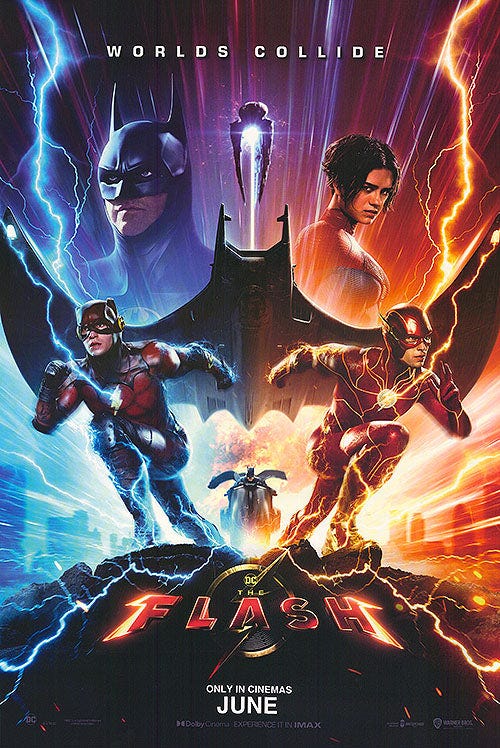
The only saving grace for this Flash was certain aspects of his solo movie - simply titled “The Flash” - that were awesome fan-service, little things I loved seeing so much that I can almost forgive how terrible the whole take on the “Flashpoint” storyline was. I didn’t mind their new Supergirl, I loved seeing Michael Keaton back in the Batsuit, and I thought George Clooney was funny (despite still believing he was the worst Batman ever cast). I loved seeing their alternate worlds, with Adam West’s Batman, with Christopher Reeve and Helen Slater standing next to each other as Superman and Supergirl respectively, and with Kevin Smith’s Superman brought to life by Nicholas Cage and fighting a giant spider, as was supposed to happen in the ill-fated “Superman Lives” script. Those moments of pure joy nearly made it worth it for me. But, just as they did with the rest of the DCEU, they screwed up the storyline again. It all falls apart, and Ezra Miller’s Flash is not fun to watch. James Gunn marketed it as the best superhero movie ever… and I think he was just lying to the world intentionally to try to sell it; I don’t think he believed that at all. His “Superman” is up there as one of the best renditions… DCEU’s “The Flash” was definitely not.
So – finally, what I meant by “The Multiverse Fixes Everything”:
The only thing that makes all of this okay for me, now that both companies are invested in multiversal stories, it that - you guessed it - the multiverse fixes everything.
Well… not everything… but a lot of things. It doesn’t really fix a shit “BvS” plot… but it can fix a “Man of Steel” plot. I didn’t mind “Man of Steel” overall, but the relationships he had with the Kents and the portrayal of him as a god among men, rather than an alien who was somehow more human than a lot of us, wrecked it for me.
But… if you look at it as a multiverse story, it’s okay that we can say, “What if there was a world where the Kents taught Clark Kent a different way of looking at his powers, his humanity, and his responsibilities to humanity? What would that Superman be like?” And then you tell that story, and over on that world, there is a version of Superman who grew up differently.
And that’s okay.
He’s not my Superman, he’s just in what DC Comics would call an “Elseworlds” story, what Marvel Comics would call a “What If…?” story. In some corner of an infinite multiverse, those versions exist somewhere… and they are bad, but it’s okay, because they are over there, and we don’t have to look at them anymore.
No, stop it… don’t look at it anymore…
What else?
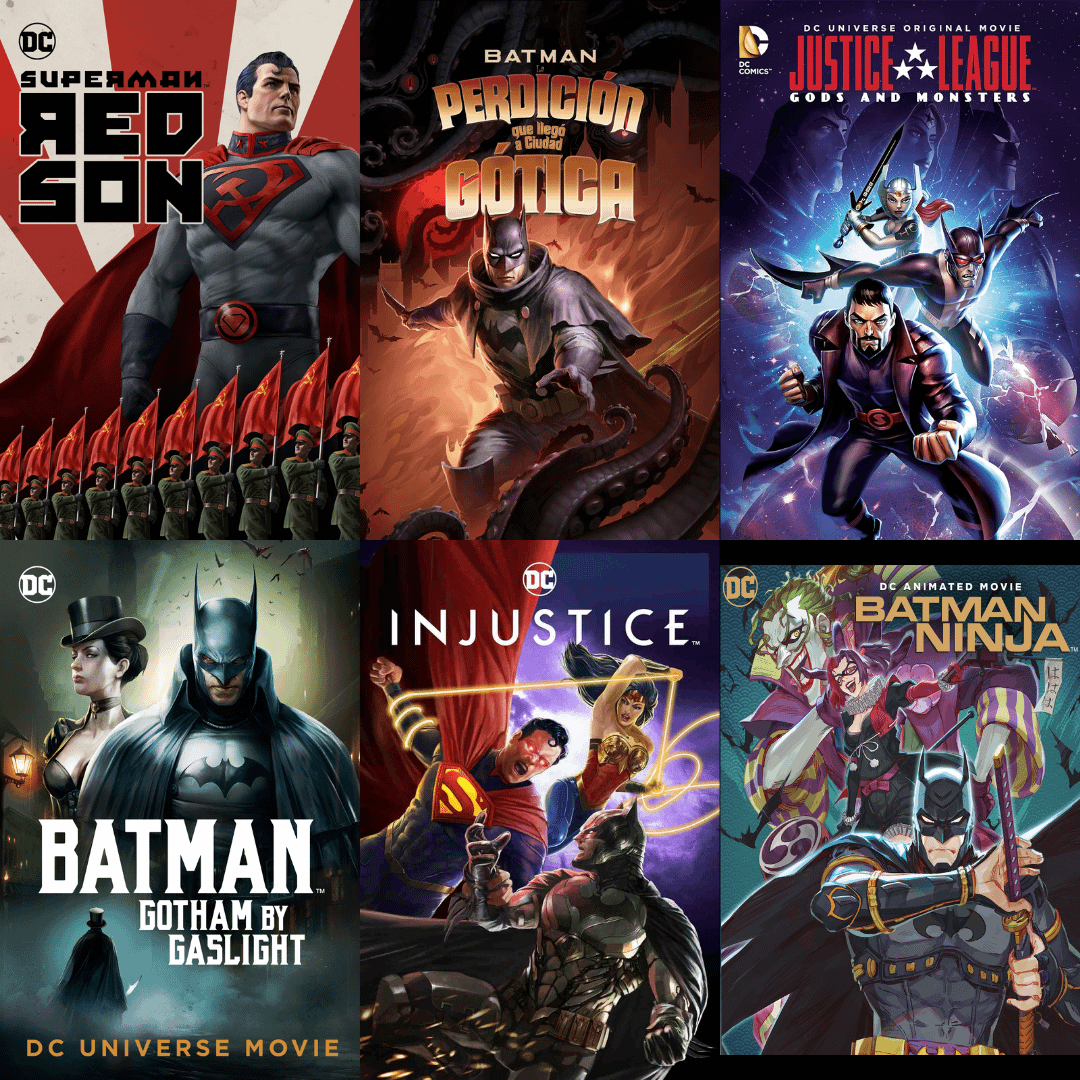
In some other version of DC’s Earth, Batman uses guns and kills people. Okay. He’s not my Batman, but he’s out there somewhere. In fact, the original “Flashpoint” Batman from the comics was Thomas Wayne, not Bruce, and he used guns and killed people, becoming the Batman after his son’s murder.
Okay, great. Next:
In some other version of Marvel’s Earth, “Agents of S.H. I.E.L.D.” exists, separate to the core MCU timeline (what they call Earth-616 in the MCU films, but what the rest of the Marvel Universe calls Earth- 199999. In the broader Marvel multiverse, Earth-616 is the home of the core Marvel comics universe, not the MCU). But now we can look at it as a multiverse story, the “Agents of S.H.I.E.L.D.” timeline is off on its own timeline, and that’s why it establishes its own rules for time travel that work for it… and why we never see Phil Coulson back in the MCU ever again…
Okay. I like this.
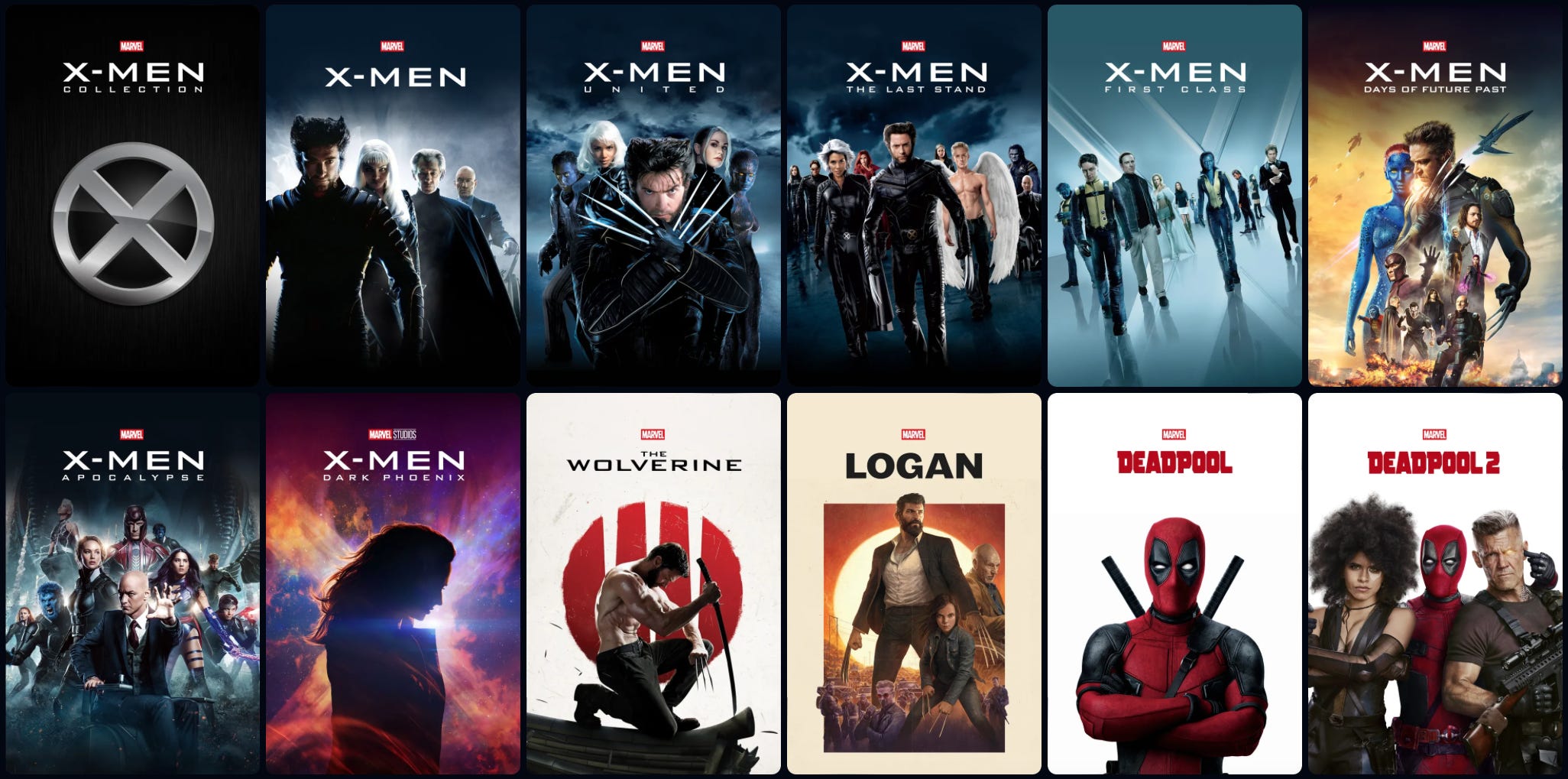
And here is my favourite: In some other corner of the Marvel multiverse, “X-Men Origins: Wolverine” exists in a different timeline, on a different earth, from “X-Men1-3”, from the “X-Men: First Class” Quartet, from “Deadpool 1-3”, from “Logan” and “The Wolverine”. That way, it doesn’t matter in the slightest what errors they made trying to force these storylines into one world… because they never were one world to begin with…
They are all “What If…?” stories, set in different places in the multiverse, not telling one story on one timeline…
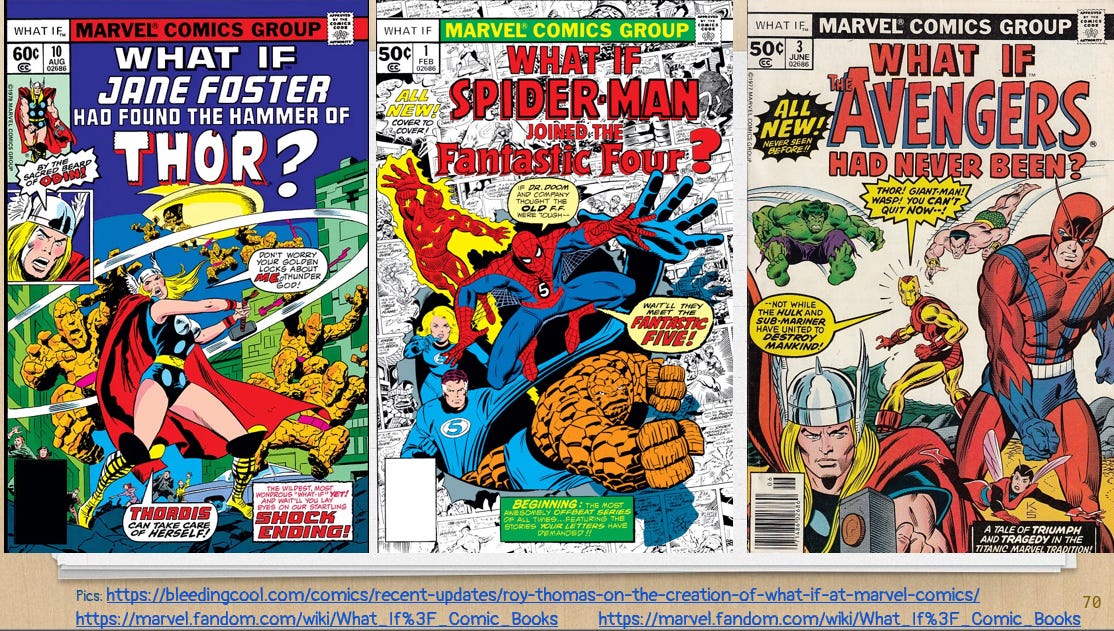
Okay, so that’s not what the filmmakers intended… but I don’t care. It helps me sleep at night…
“Deadpool and Wolverine” (aka “Deadpool 3”) implies that all of the Fox Films are part of one world, but of course that doesn’t all easily line up. Within that mess of films, there are three different Juggernauts, two different Colossuses – all of massively different sizes and power levels. There are two different Professor X’s and Magnetos, at least three different Cyclops, and three different Strykers… I could go on and on. All of those versions do not line up. The America we see in “Deadpool” is not as apocalyptic as the one we see in “Logan”, and yet they are apparently the same world and occurring at the same time, because Deadpool seems to know who the Wolverine of the “Logan” film is. I always assumed “Logan” was in the future of the “X-Men” film timeline and “Deadpool” was in the present, but apparently not…
(As a character, Deadpool is an anomaly anyway, because he breaks the Fourth Wall and is aware of himself as a character in a story and in a complicated film universe that he directly references. He mentions different versions of Professor X, using the actor’s names. He comments on the third Juggernaut as “this year’s Juggernaut”. He references the horribly mistreated “X-Men Origins: Wolverine” version of his own character, and Ryan Reynolds’ “Green Lantern”… In short, this Deadpool knows he’s in a movie series with complicated and contradictory elements, and he freely comments on them to the audience. I love it, it’s very funny)
But… if you can say that all of these versions do not actually exist in the same timeline, well, I can fall asleep and rest easily, because they are different stories, not one story. The inconsistencies don’t matter because the films are internally consistent in their own unrelated storylines, in their own corners of the multiverse. Wolverine in “X-Men 1-3”, is not the same Wolverine as “X-Men Origins: Wolverine”… or “Logan”… or “The Wolverine”… or “Deadpool and Wolverine”… Instead, I look at them as all being variants of Wolverine in different timelines in different parts of the multiverse, and so it’s okay that they don’t all line up.
Sigh… good night, for a peaceful sleep.
And we can apply that to other series too… Like James Bond – each Bond is in a different timeline, and so their stories and characters can be completely different, or they can contain some of the same actors popping up at different times. Judy Dench’s M, jumping between Brosnan and Craig’s Bond films can make sense, in a way it doesn’t if you look at the Bond films as one timeline only. Craig played Bond at the start of his career. Brosnan’s Bond was a seasoned veteran. Dench was in both sets of films, even though our actors played M in movies set between the two series…
It never made sense to me.
Now it can.
Hell, making Idris Elba Bond CAN make sense too – because they are not on the one timeline or in the one multiverse. They are not the same version of the same man. Different Bonds on different timelines in the multiverse. (I am also a fan of the theory that “James Bond” is simply the name used by different Agents with the 007 designation – they are not the same man, and when one dies or retires, the next takes his place, and that’s why they are all so different. That works for me too).
What about “Highlander 2”? Where they made the immortals aliens? A decision ignored by every “Highlander” project that followed (The TV series, “Highlander 3-5”, etc…)?
That’s okay, I’m here to fix it – in some world in the multiverse, that’s true. In the core timeline, it’s not. It’s okay, because if I see it my way, they are not on the one timeline at all.
Star Trek did this very well. They rebooted their film universe, but brought some people across from the original timeline to observe how different it was. And they retold the same stories in completely new ways, for a new generation of viewers. Awesome. Some shows continue in the original timeline, some in the new one. Great.
Every version of Batman represents a different era from the comics – there have been campy versions, dark versions, detective versions where a blue and grey Batman walks down the street in broad daylight and carries a policeman’s badge. Give all of them a place on separate timelines in separate corners of the multiverse. Separate Tim Burton’s two films from Joel Schumacher’s two, and then separate those two from each other as well. Give Keaton, Kilmer, and Clooney different timelines and stop thinking of them as one four-part film series. Give Ben Affleck his own timeline in a separate universe from Robert Pattinson’s – it’s okay, they are who they are in different places in the multiverse.
They’re not your Batman?
It’s okay, they can be someone else’s Batman… over there.
Stop looking over there. Eyes on me!!
Now, it doesn’t fix a bad storyline like “BvS” or “Suicide Squad”, but it does give a little grace to different versions. When I go into a film now, I need to see them as different versions on a different timeline – they are all “Elseworlds” stories. They are all “What If…?” stories.
They won’t all be my Batman, like I once expected, and that’s okay. They are giving us different versions for different people. Different characters from different places.
It’s all about how you choose to look at it…
Maybe that way, I can try to love everything out there…
…It won’t work…
…but I can try…

As always, thanks for reading!!!